
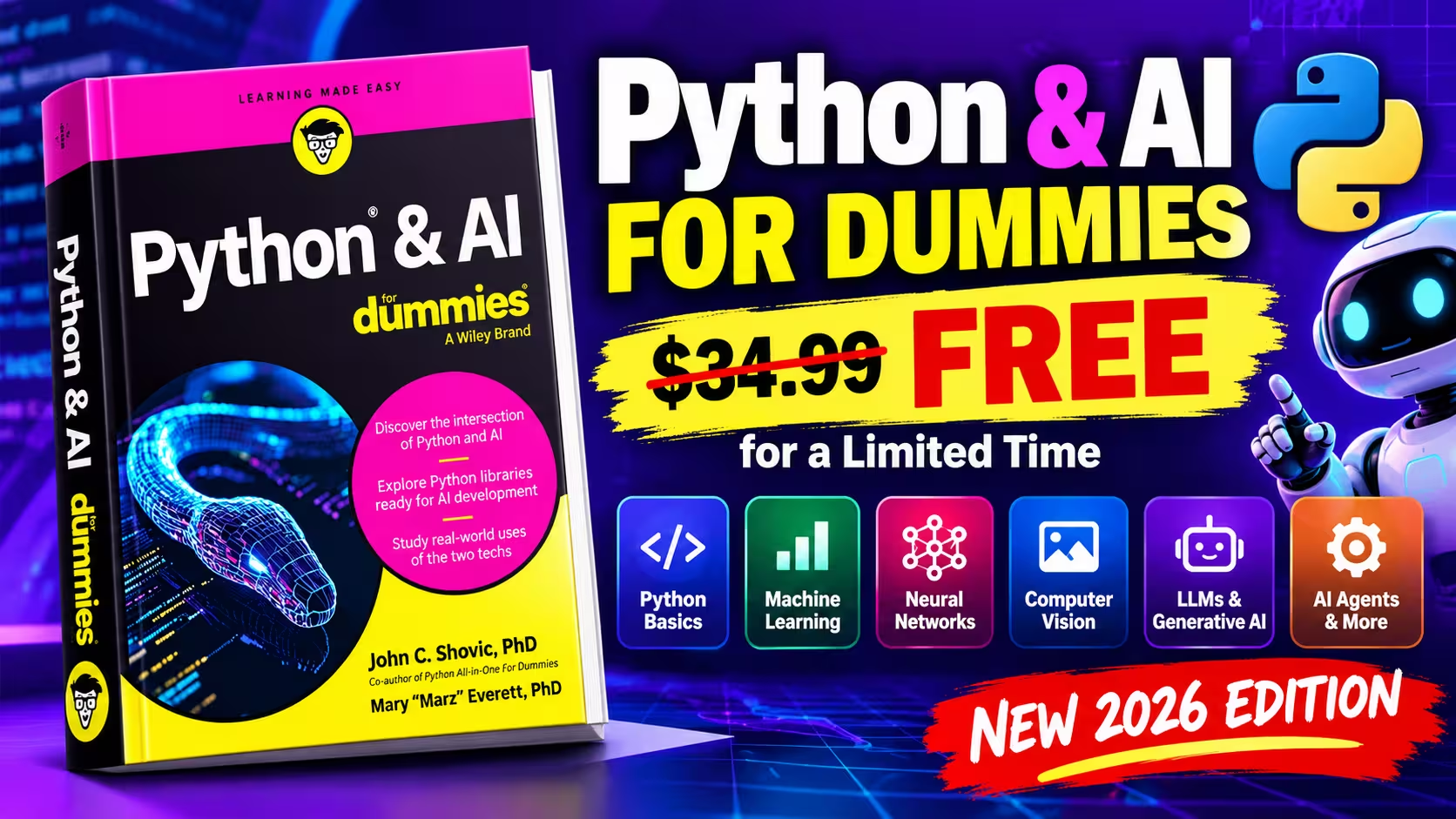
🎁 FREE EBOOK · NEW 2026 WILEY TITLE
From your first Python script to AI agents — get this $34.99-value book free until October 13
Wiley’s new Python & AI For Dummies is available free through TradePub right now. I claimed a copy and went through both the PDF and the signup process, so you’ll know exactly what’s inside and what you’ll need to hand over.
LISTED VALUE
$34.99 → $0
LENGTH
418-page PDF
OFFER ENDS
Oct 13, 2026
⚡ Quick Read
- What: Python & AI For Dummies by John C. Shovic, PhD and Mary “Marz” Everett, PhD (Wiley, 2026).
- Covers: Python basics, data prep, scikit-learn, neural networks, OpenCV, LLMs, generative AI and AI agents.
- Cost: $0 via TradePub (listed value $34.99) until October 13, 2026.
- The catch: TradePub asks for a work email and a short work profile, and you agree Wiley and its partners may contact you with marketing.
- Best for: Python beginners, developers moving into AI/ML, students, and anyone who wants one broad introduction spanning Python and modern AI.
Most people who want to “learn AI with Python” hit the same wall. The Python tutorials stop at loops and functions, and the AI tutorials assume you already know NumPy, pandas, scikit-learn and three other libraries. The gap in the middle is where most learners give up.
That gap is exactly what Wiley’s new Python & AI For Dummies tries to fill. It came out in August 2026, so this isn’t an old edition being cleared out — it’s one of the newest books in the Dummies range, and it goes all the way from writing your first program in VS Code to LLMs, generative AI and AI agents. For the next couple of weeks, TradePub is giving it away. The offer lists its value at $34.99.
I’ve been covering TradePub book offers on Techno360 for years, so I went through the claim process myself before writing this. Below you’ll find what the book actually teaches, who’ll get the most from it, and the honest trade-off of signing up.
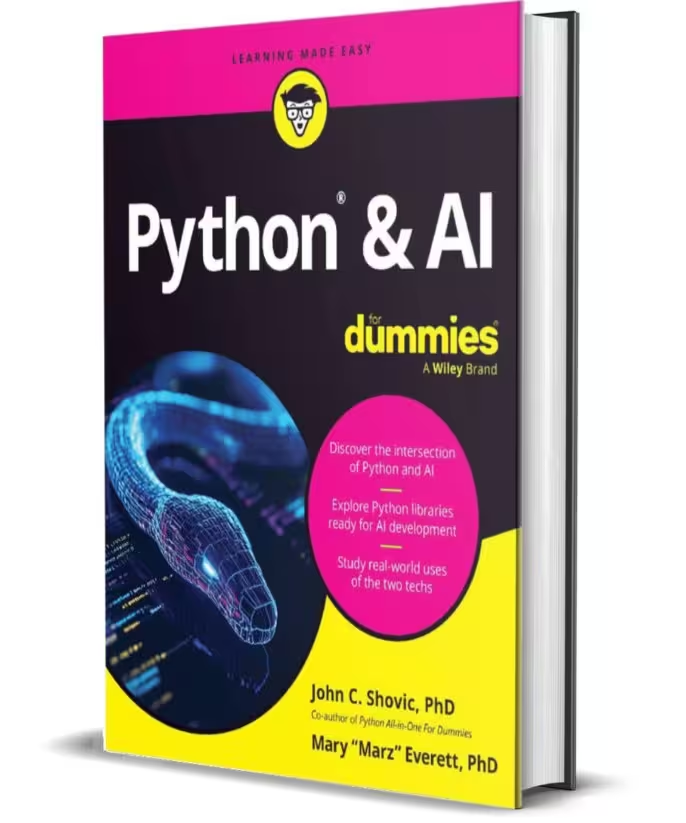
✅ Tested by Techno360
Claim tested: September 30, 2026
Result: Claimed successfully
Format: PDF
Pages: 418
File size: about 18.5 MB
Access: TradePub email + My Library
The Ebook at a Glance
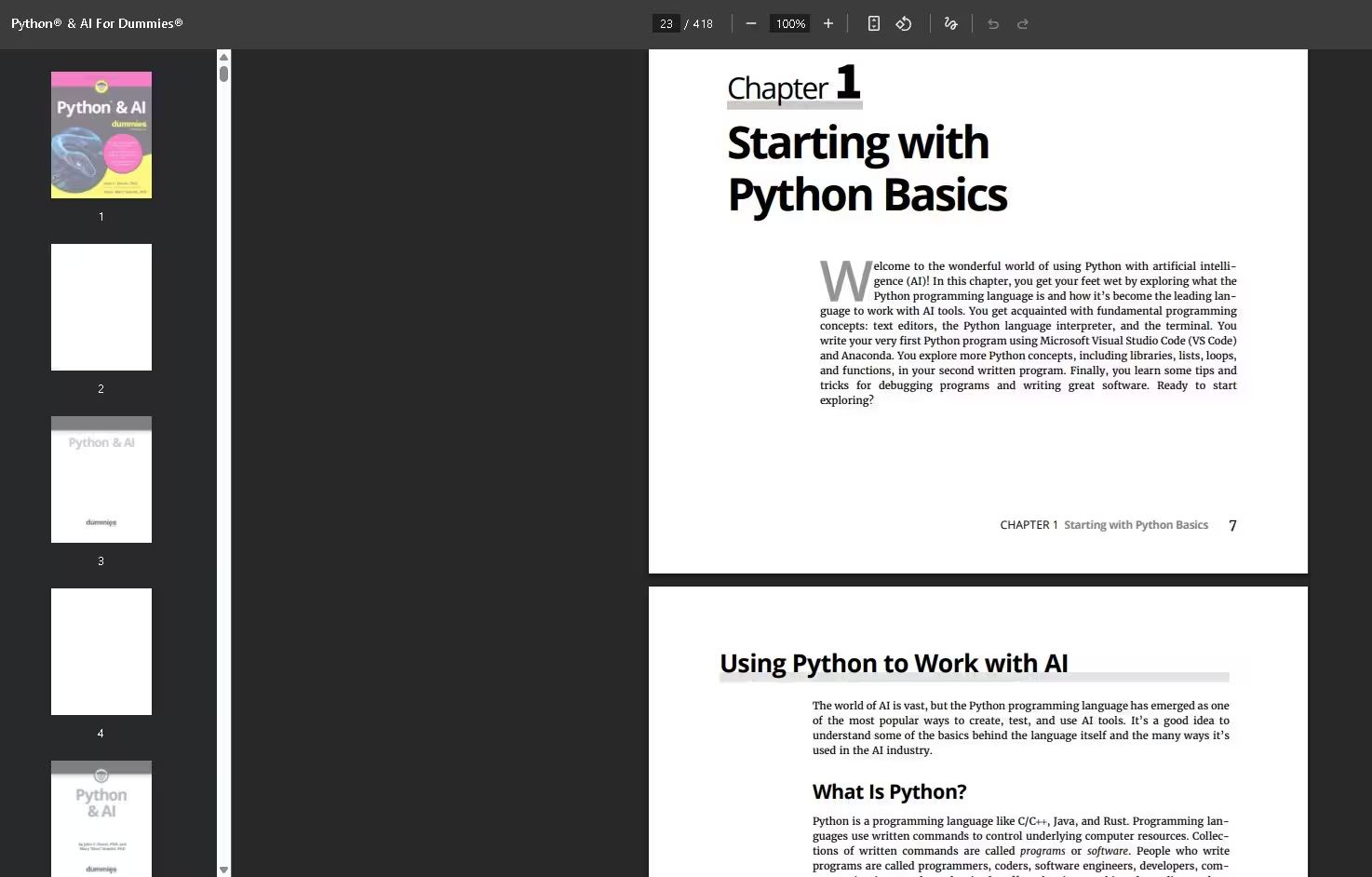
A small note on page count: you’ll see slightly different numbers on store listings depending on the format. The PDF I downloaded from TradePub shows 418 pages in the viewer, cover and front matter included.
Why This Book Stands Out From Other Free Python Ebooks
We’ve shared plenty of free Python titles on Techno360 — beginner guides, deep learning books, security-focused ones. Most of them do one job. This one is built as a staircase instead:
Python basics → working with data → classic machine learning → neural networks → computer vision → LLMs & generative AI → AI agents
That order matters. It means “AI” here isn’t just a chapter about prompting ChatGPT. You learn why a model works before you’re asked to use one, which is the part most crash courses skip. According to Wiley, the book leans on the libraries people actually use in the field — TensorFlow, PyTorch, OpenCV and scikit-learn — and it also touches newer topics such as the Model Context Protocol (MCP).
One more reason it caught my eye: John Shovic also co-wrote Python All-in-One For Dummies, a 700-page Python book we covered when it was free on TradePub. If you liked his teaching style there, this is the AI-focused follow-up.
What’s Inside: A Part-by-Part Tour
1. Getting set up with Python (no experience needed)
Chapter 1 starts from zero. When I opened the PDF, the chapter intro promises exactly what a beginner needs: text editors, the Python interpreter and the terminal, then your first program written in VS Code with Anaconda. From there it moves to libraries, lists, loops and functions, and ends with debugging tips. Chapter 2 covers the core ideas behind AI and machine learning — what a model is and how you judge whether it’s any good — and Chapter 3 is all about cleaning, filtering and visualising data, including how to deal with missing values.
2. Classic machine learning with scikit-learn
This is the bread-and-butter section. You learn to split data into training, validation and test sets, then work through classification, regression and clustering. Decision trees, random forests, bagging and boosting all get covered. If you’ve ever wondered why data scientists still reach for a random forest before a neural network, this part explains it.
3. Neural networks and deep learning
Next come the building blocks: activation functions, gradient descent, backpropagation, hyperparameters, and the classic overfitting-versus-underfitting problem. The book then walks through the main network types — feed-forward, CNNs, RNNs, autoencoders — and finishes with attention and transformers, the architecture behind many modern language models and other AI systems.
4. Computer vision with OpenCV
Machine vision gets a full section of its own. You’ll see how images are stored as pixel matrices, how colour spaces and edge detection work, and how to move on to CNN image classification and object detection, including preparing and labelling your own datasets. The section also covers Google Colab, which is handy when your own machine doesn’t have much computing power.
5. LLMs, generative AI and AI agents
This is the part that makes the book feel current. It explains how large language models are put together, how to call them from Python through APIs, and where they fall short. The generative AI chapter covers GANs, variational autoencoders, diffusion models and AI code generation. Then there’s a full section on AI agents: writing agent programs in Python, retrieval-augmented generation (RAG) and agentic RAG, and a web-scraping agent — plus an honest look at what agents still can’t do reliably. Reinforcement learning and evolutionary (genetic) algorithms round things off.
6. The “Part of Tens” — practical project advice
Classic Dummies style: short checklists at the back. One is a ten-step plan for running an AI project — talk to people who know the problem, define it, check it’s worth doing, gather and explore the data, choose models and metrics, iterate, and make the output useful. The other lists ten common mistakes, from skipping data exploration and picking the wrong metric to ignoring bias and never monitoring a model once it’s live. Honestly, these two lists are worth reading even if you skip the code.
Who Is Python & AI For Dummies For?
👍 A good fit if you are…
- A beginner who wants Python and AI in one place
- A developer moving into machine learning
- A student who wants the theory behind the tools
- Curious about computer vision, RAG or AI agents
- An analyst, marketer or small-business owner wanting practical AI skills
👎 You may want something more advanced if…
- You already train PyTorch or transformer models for a living
- You want a deep, maths-heavy reference on one topic
- You’re not comfortable sharing work details with a publisher
If you want to go deeper on one area afterwards, two older giveaways we covered pair nicely with it: Python Deep Learning (Third Edition) for neural networks, and Artificial Intelligence For Dummies if you’d like the big-picture, non-coding view of AI. Those specific offers may have ended, but the posts explain what each book covers.
How to Get Python & AI For Dummies for Free
I went through these steps myself on September 30, 2026. The whole thing took about two minutes. Before you start, here’s what TradePub will ask of you.
⚠️ Before you claim it
- Work email: the offer page states that an active work email is required. Interestingly, I was able to go ahead with a Gmail address in my test, but the stated requirement is still a work email.
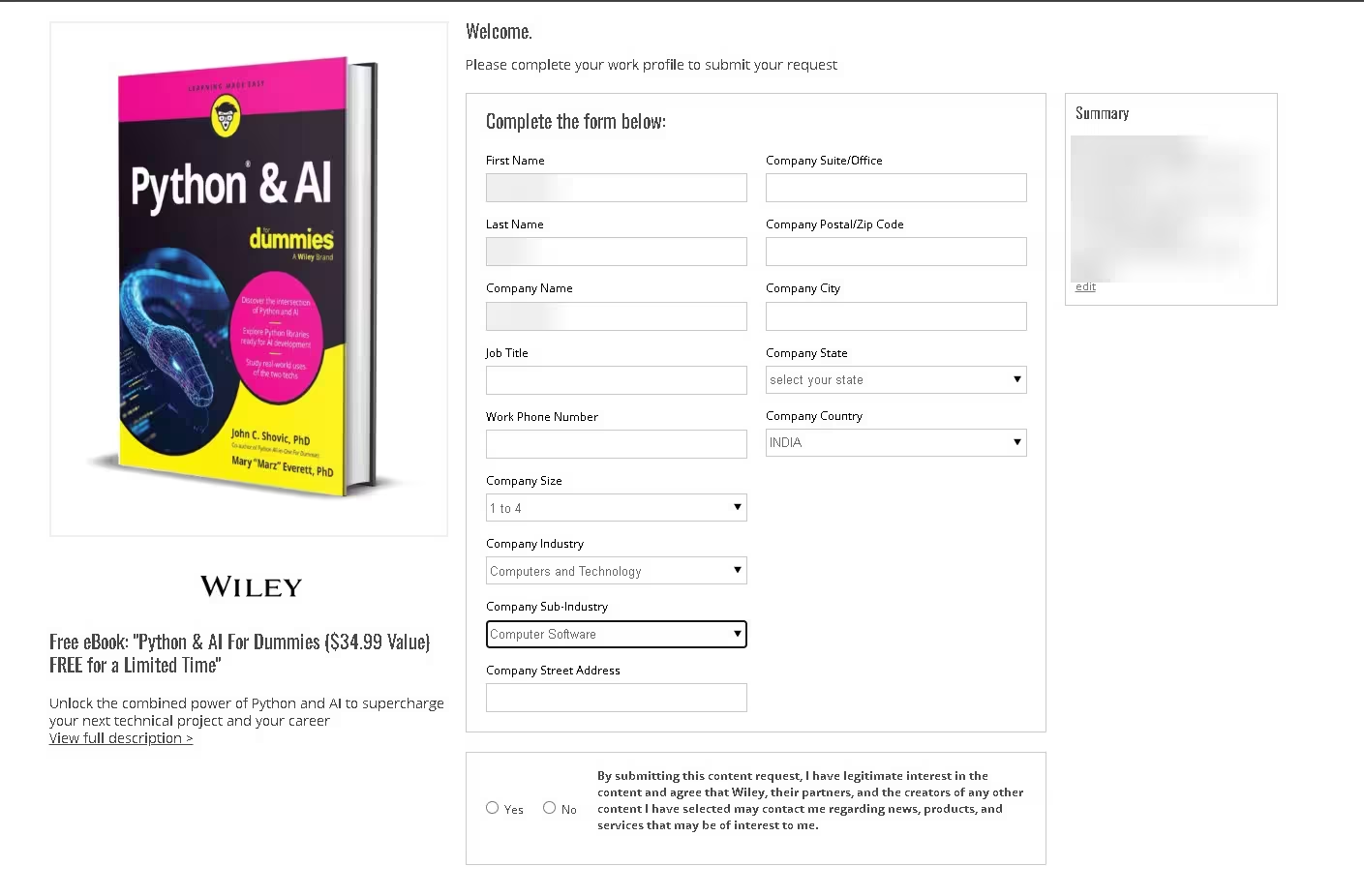
- Profile details: the form asks about your company, job title, phone, company size, industry and address.
- Marketing: submitting means you agree that Wiley, its partners and the makers of the content you pick may contact you about news, products and services.
- Deadline: TradePub currently lists the free offer through October 13, 2026. Availability and terms may change after that date.
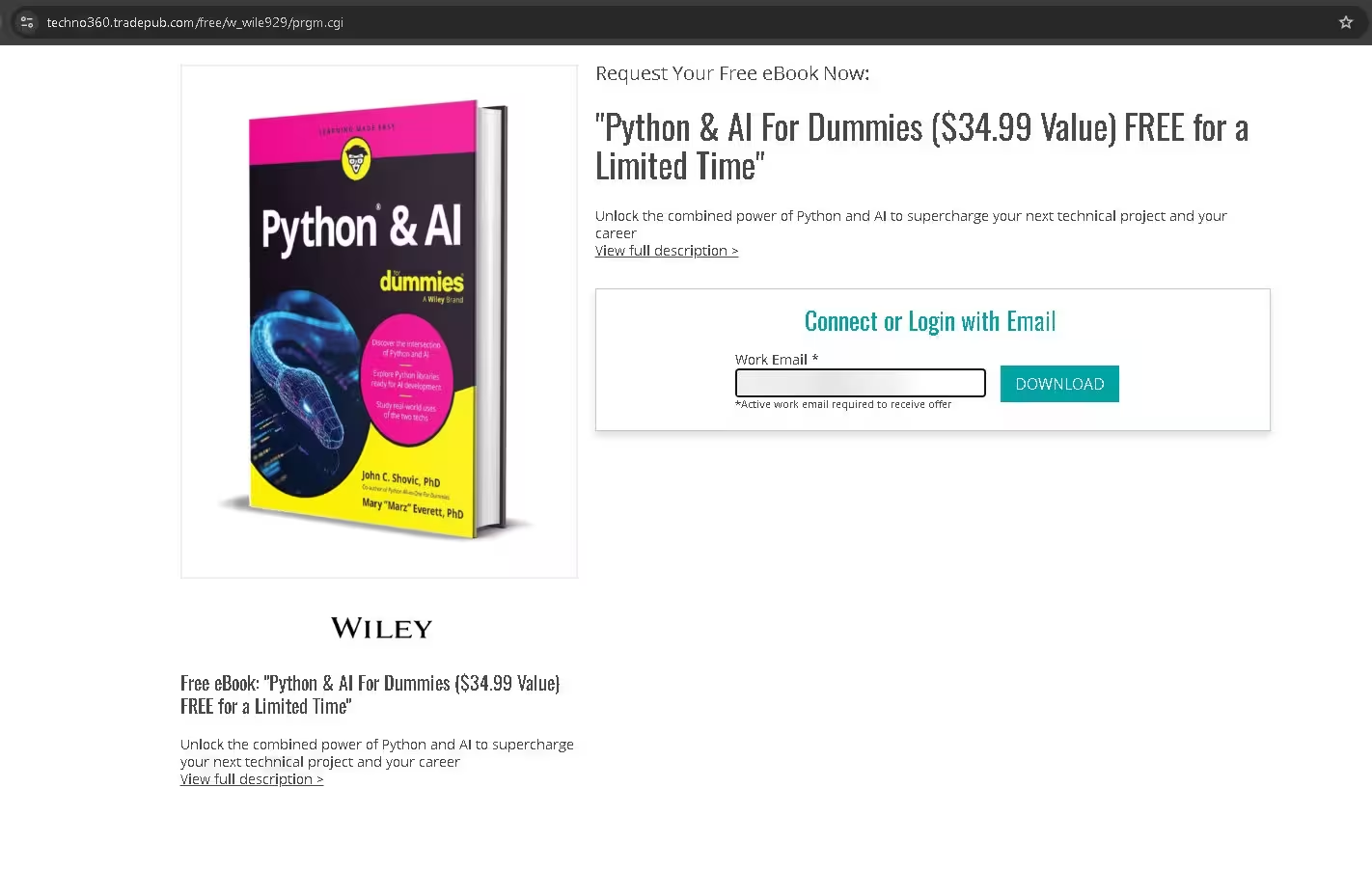
- Open the offer page on TradePub.
- Type your email into the box and press Download. Already have a TradePub account? The same box logs you in.
- Fill in the work-profile form — name, company, country, company size, industry and so on.
- Answer the Yes/No consent question at the bottom and submit.
- Grab your copy from the download link TradePub emails you.
What happens after you claim it?
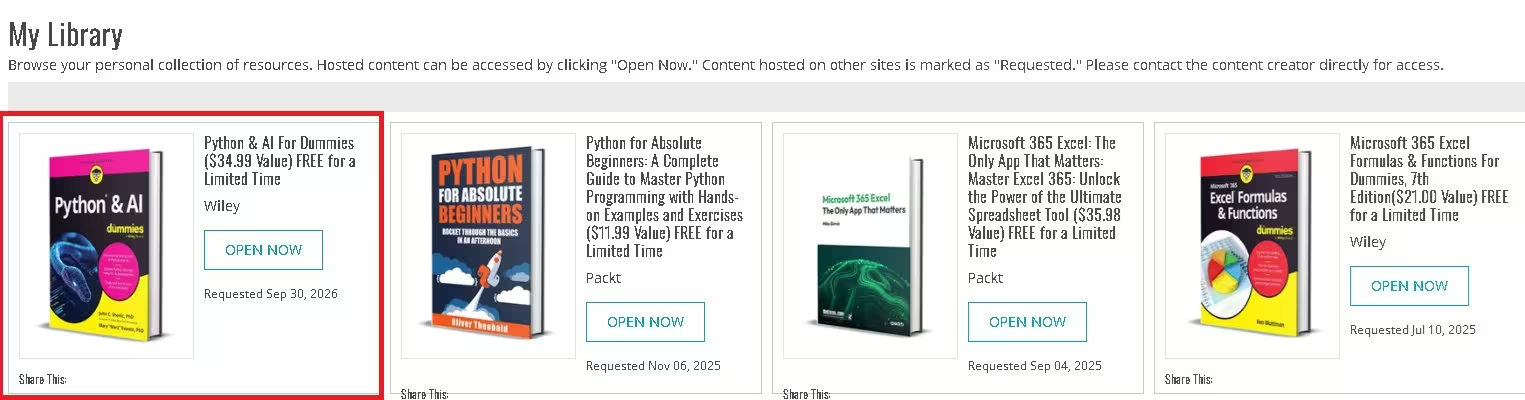
Along with the email, the book is saved to My Library in your TradePub account. Click Open Now to read or download it again whenever you like, which helps if the email lands in spam.
About the Authors
John C. Shovic, PhD teaches computer science at the University of Idaho and directs its Center for Intelligent Industrial Robotics. He’s also a co-author of Python All-in-One For Dummies.
Mary “Marz” Everett, PhD is a research scientist at the same university, working on AI, robotics and precision agriculture. Wiley describes the book as built around hands-on projects and real-world examples, from machine vision systems to AI agents.
📊 Techno360 Verdict
Python & AI For Dummies is a broad, beginner-friendly introduction that ties Python fundamentals to machine learning, deep learning, computer vision, LLMs, generative AI and AI agents. I claimed it myself and got a working 418-page PDF in my TradePub library. It won’t replace a specialist deep-learning text, and the real cost is the information TradePub asks for: work-profile details and consent to marketing. If you’re comfortable with that, this is an easy way to get a brand-new, $34.99-value book without paying for it.
Looking for more? Browse our full collection of free tech and programming ebooks — we add new TradePub offers as soon as they go live.
Frequently Asked Questions
Is Python & AI For Dummies really free?
Yes, through TradePub until October 13, 2026. You don’t pay anything, but you do register and fill in a short work profile. Its listed value is $34.99.
Do I need a work email address?
TradePub’s page states that an active work email is required. In my test a Gmail address was accepted, but the stated requirement is a work email.
Is this book OK for complete beginners?
Yes. It opens with setting up Python, VS Code and Anaconda and writing your first program before any AI topics appear. Later chapters get more demanding, so expect to work through it in order.
Which Python libraries does it use?
The publisher highlights TensorFlow, PyTorch, OpenCV and scikit-learn, alongside the usual data tools you meet in the early chapters.
Does it cover LLMs and AI agents?
Yes. There are chapters on how large language models work and how to use them from Python, on generative AI, and on AI agents including RAG and agentic RAG. Wiley also mentions the Model Context Protocol.
How big is the download?
It’s a PDF of about 18.5 MB with 418 pages.
Where do I find the ebook after I claim it?
Check your inbox for TradePub’s email with the download link. You can also log in to TradePub and open it from My Library at any time.