
In 2025, privacy tools were all the rage, and rightfully so. Finding a trustworthy virtual private network (VPN) is crucial in this age of increasing digital surveillance. While paid plans are still the norm, a new low-cost option has arisen: VPNly.
The phrase “free VPN” usually makes people suspicious because it frequently means data caps, poor connections, or adverts that get in the way. But VPNly is getting a lot of attention since it promises a private, unlimited experience based in Switzerland, one of the most privacy-friendly places in the world.
Here are a few reasons why this program could be the missing piece for your desktop, laptop, or mobile device.
Contents
What Is VPNly?
VPNly boasts no-logs and complete traffic encryption, and it’s free. You can join without creating an account.
The Swiss Advantage: Privacy First
Location is one of VPNly’s major selling factors. Similar to the well-known Proton VPN, it is based in Switzerland and hence works outside of the purview of the so-called “14 Eyes” surveillance coalition.
The service does not keep any records of your web browsing, your IP address, or any other personally identifiable information. They have a firm “no-logs” policy.
The fact that an account isn’t required is probably the finest benefit for those who value privacy. Just install and connect; no email verification or password remembering required.
Unlimited Bandwidth & Cross-Platform Support
Most free subscriptions only let you use 500MB or 10GB of data, but VPNly says it offers unlimited time and bandwidth. This means you can safely stream videos or do a lot of web surfing without worrying about being disconnected in the middle of your session.
Anywhere you go, VPNly will function. There are specialized apps and extensions available for:
- Desktop: Windows, macOS
- Mobile: Android, iOS
- Browsers: Chrome, Firefox, Edge, Opera, Yandex
Privacy Features & Security
Regarding privacy, VPNly boasts several safeguards that conceal your whereabouts and identity.
- No-logs policy: asserts that it does not keep any records of user activity, connections, or personal information; furthermore, it states that it complies with Swiss privacy regulations.
- Leak protection: To ensure that your actual IP address and DNS queries remain hidden, the service includes WebRTC leak prevention and DNS leak prevention as its primary safeguards.
- Encryption: Secure protocols and encrypted servers are mentioned in order to encrypt all network traffic.
| Feature | VPNly Offering |
|---|---|
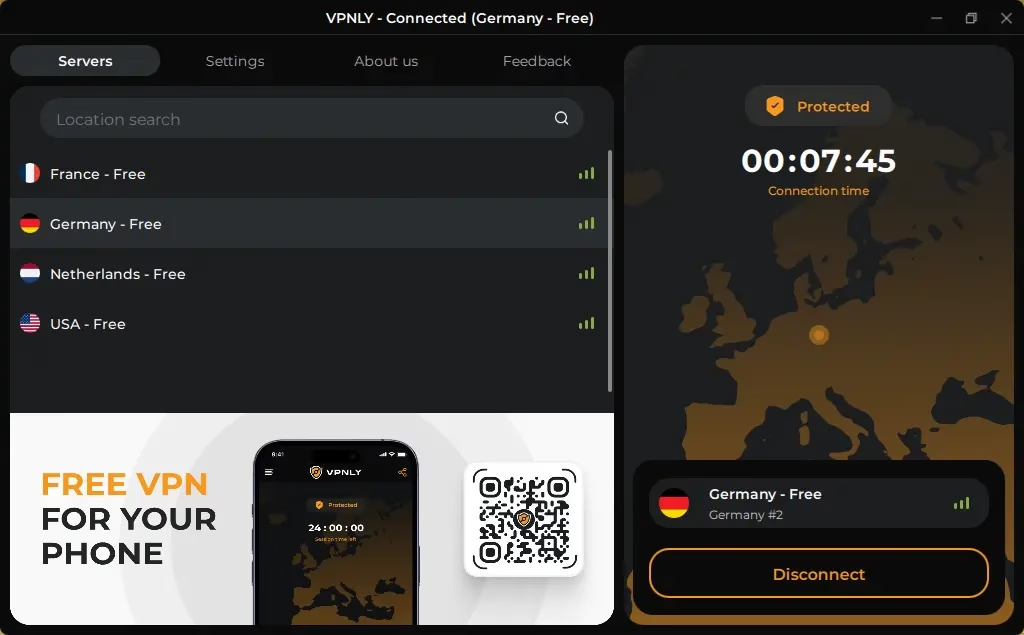
| Server locations | 4 global regions (including France, Germany, the Netherlands, and the US) |
| Number of servers | 20+ free servers with no paywall |
| Bandwidth & time limits | Unlimited traffic and no session time limits |
| Intended use cases | Browsing, streaming, and bypassing regional restrictions |
VPNly markets “high‑speed” servers, but as with any free VPN, real‑world performance will depend on server load and your distance from available locations.
How to Set Up VPNly on Your Devices
- Download VPNly
- Visit the official website and choose the app for your platform: Windows, macOS, Android, iOS, or browser extension.
- Install the app from the official site or from app store to avoid tampered builds.
- Install required components
- On Windows, approve the installation of the TAP‑Windows Provider V9 driver when prompted, as this is needed to route your traffic through the VPN tunnel and hide your IP.
- Connect to a server
- Launch the app or extension and select a server in France, Germany, the Netherlands, or the US.
- Use the “fastest server” or similar option if available to optimize speed from India or your current region.
- Enable the kill switch (if available)
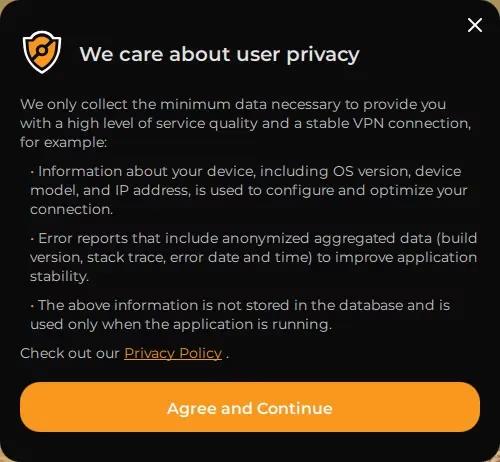
- Turn on the kill switch so that your internet connection is automatically blocked if the VPN connection drops, preventing accidental IP exposure.
⚠️ The Caveats: Audit & Verification
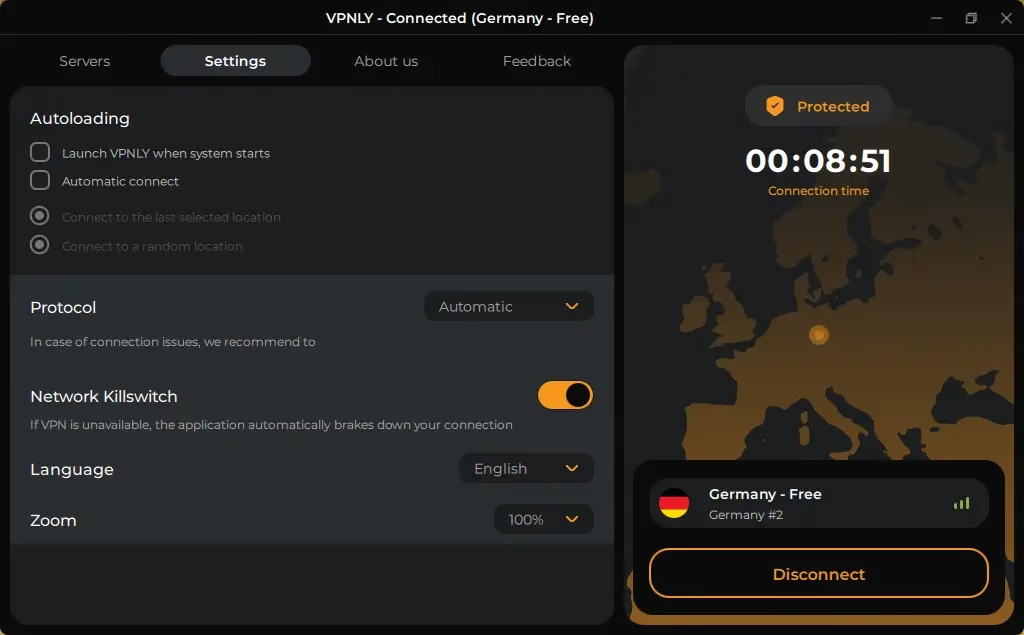
Although VPNly meets several standards and benefits from Swiss jurisdiction, its lack of an independent privacy audit raises transparency concerns that I hope will be addressed as the program expands in 2026.
How to Test Your Leak Protection?
The word of a VPN isn’t always reliable. Data leak prevention is of the utmost importance, especially with free services.
- Connect to a VPNly server.
- Visit IP/DNS Detect (ipleak.net).
- Check the results.
If the site detects your real location, your actual IP address, or your ISP via WebRTC, the VPN isn’t doing its job. If it shows the VPN server’s location, you are browsing anonymously.
Final Verdict
In 2025, VPNly presents an attractive bundle: it is free, it has limitless bandwidth, and it removes the registration barrier to protect user privacy. Keep in mind that it isn’t independently audited, but other than that, its Swiss origins and no-logs policy make it a formidable rival to limited free VPNs.
Try VPNly if you want to bypass geo-restrictions and mask your online footprint with an easy-to-install service.
Webpage: https://vpnly.com/


Discover more from Techno360
Subscribe to get the latest posts sent to your email.
You must be logged in to post a comment.